Introduction
Vegetarian Fajita Pasta combines the vibrant, spicy flavors of traditional fajitas with the comforting texture of pasta, making it a crowd-pleasing dish perfect for any occasion. This recipe delivers a delightful medley of sautéed vegetables and spices, all tossed with your choice of pasta. It's quick to prepare, making it an ideal weeknight dinner that doesn’t compromise on flavor.
The beauty of this dish lies in its versatility. You can easily adapt the ingredients based on what you have on hand or your personal taste preferences. Whether you opt for whole wheat, gluten-free, or traditional pasta, each bite will transport you to a fiesta of flavors. Let’s dive into this delightful recipe that's both nutritious and satisfying!
Ingredients
- 8 ounces of pasta
Choose your preferred type, whether it's spaghetti, penne, or gluten-free to create a hearty base for the dish. - 1 bell pepper, sliced
Adds a sweet crunch and vibrant color to the dish, complementing the spicy fajita flavors. - 1 zucchini, diced
Contributes moisture and slight earthiness, helping to round out the dish while also packing in nutrients. - 1 yellow onion, sliced
Caramelizes beautifully when sautéed, adding sweetness and depth to the overall flavor profile. - 2 cloves of garlic, minced
Infuses the dish with aromatic flavor and serves as a great flavor enhancer for the sautéed vegetables. - 1 tablespoon chili powder
Provides a warm, spicy essence that is essential to achieving the classic fajita taste. - 1 teaspoon cumin
Adds a nutty, smoky flavor that harmonizes wonderfully with the spices and vegetables. - 1/2 teaspoon smoked paprika
Gives a subtle smokiness that elevates the fajita experience without overpowering the other flavors. - Salt and pepper, to taste
Essential for balancing the flavors, with adjustments made to suit personal preference. - 2 tablespoons olive oil
Used for sautéing the vegetables, it brings richness and helps sauté everything evenly. - 1 cup vegetable broth
Serves as the cooking liquid, infusing the pasta with added flavor while keeping the dish moist. - 1 tablespoon lime juice
Adds a refreshing citrusy brightness that balances the richness of the pasta and depth of spices. - Fresh cilantro, for garnish
Enhances the dish with fresh herbaceous notes, adding both visual appeal and flavor.
Directions & Preparation
Step 1: Cook the pasta according to package instructions, drain and set aside.
Cooking the pasta al dente ensures it retains some bite, which will hold up well against the hearty vegetables and rich sauce. Draining it and setting it aside allows you to focus on building the flavors in your sauté pan next.
Step 2: In a large skillet, heat olive oil over medium heat.
Heating the oil properly is essential for sautéing the vegetables effectively. It creates a nice surface for the veggies to cook evenly and start to caramelize, which enhances their natural sweetness and flavors.
Step 3: Add sliced onions and sauté until they become translucent.
Sautéing the onions first allows them to soften and develop sweetness, creating a flavorful base for the dish. This step also releases their aromatic qualities, which will permeate the entire dish.
Step 4: Stir in the garlic and sauté for another minute until fragrant.
Adding garlic slightly later prevents it from burning, which can cause bitterness. This step is crucial for maximizing garlic's fragrant oils, enhancing the dish's overall flavor.
Step 5: Add the sliced bell pepper and diced zucchini; continue to sauté for about 5 minutes.
The bell pepper and zucchini should be added next since they benefit from a longer cooking time, allowing them to soften and meld with the flavors of onion and garlic. The goal is to have tender yet slightly crisp vegetables.
Step 6: Sprinkle in chili powder, cumin, smoked paprika, salt, and pepper; stir to combine.
Adding spices at this point allows them to bloom in the heat, intensifying their flavors and ensuring they coat the vegetables evenly. This melding of spices elevates the entire profile of your dish.
Step 7: Pour in the vegetable broth and bring the mixture to a simmer.
The broth aids in combining the flavors while also giving the vegetables the moisture they need to cook down further. Simmering melds the spices with the vegetables, forming a rich sauce that will coat the pasta later.
Step 8: Mix in the cooked pasta and lime juice, stirring to combine everything well.
Tossing the pasta with the sautéed vegetables and broth allows the noodles to soak up the flavors. The lime juice adds a refreshing note that cuts through the richness of the dish, making each bite vibrant.
Step 9: Taste and adjust seasoning if necessary, then serve hot, garnished with fresh cilantro.
Tasting the dish ensures that you have balanced the flavors. Adjusting the seasoning at this final stage allows for a personalized touch, ensuring each bowl is tailored to your palate. Garnishing with cilantro adds a fresh, aromatic touch.

Beyond the Pasta: Unique Vegetable Combinations
Feel free to explore various vegetable combinations for your fajita pasta. Shredded carrots, cherry tomatoes, or even corn can be fantastic additions. Each vegetable brings its unique texture and flavor, contributing to a more diverse dish. Don’t hesitate to experiment based on seasonal availability or personal preference; the possibilities are endless!
Elevate Your Dish with Homemade Seasoning
Consider making your own fajita seasoning to elevate the flavors of this dish. Combine paprika, onion powder, garlic powder, and a pinch of cayenne for a customized spice blend. This way, you can significantly enhance the flavor profile and adjust the spice levels to best suit your taste, ensuring that your Vegetarian Fajita Pasta is tailored to perfection.
A Creative Twist: Add Protein Options
For additional protein, think about adding chickpeas or black beans into your Vegetarian Fajita Pasta. Both options complement the flavors beautifully while also providing a satisfying, hearty element. Incorporating these legumes will not only enhance the nutritional value of your dish but also keep it filling and energizing.
FAQs
What if my pasta is overcooked?
If your pasta ends up overcooked, a quick fix is to add it directly to sauce for a minute or so to absorb flavors, then serve immediately.
My sauce turned out too thick; how can I fix it?
You can loosen a thick sauce by gradually adding more vegetable broth or water while stirring until you reach your desired consistency.
Can I use different types of pasta?
Absolutely! You can substitute traditional pasta with whole wheat, gluten-free, or any shapes you prefer, adjusting cooking times accordingly.
How can I spice it up if I find it bland?
Boosting the spice level can be achieved by adding more chili powder or cayenne pepper; also try incorporating jalapeños for extra heat.
What if I want to add more vegetables?
Feel free to incorporate more vegetables like mushrooms or spinach; just adjust your sautéing time for those that require longer cooking.
Can I make this dish with different herbs?
Certainly! While cilantro adds a nice touch, consider basil or parsley for a fresh, different flavor profile.
Conclusion
Vegetarian Fajita Pasta is more than just a meal; it’s a vibrant celebration of flavors and textures that can easily be tailored to suit individual tastes. By bringing together fresh vegetables, spices, and pasta, this dish creates a delightful experience that invites creativity in the kitchen.
Whether you're preparing for a family dinner or a casual gathering with friends, this recipe offers an exciting twist on traditional fare, ensuring everyone walks away satisfied. Embrace the flavors and make this dish your own; you won't be disappointed!
Recipe Card
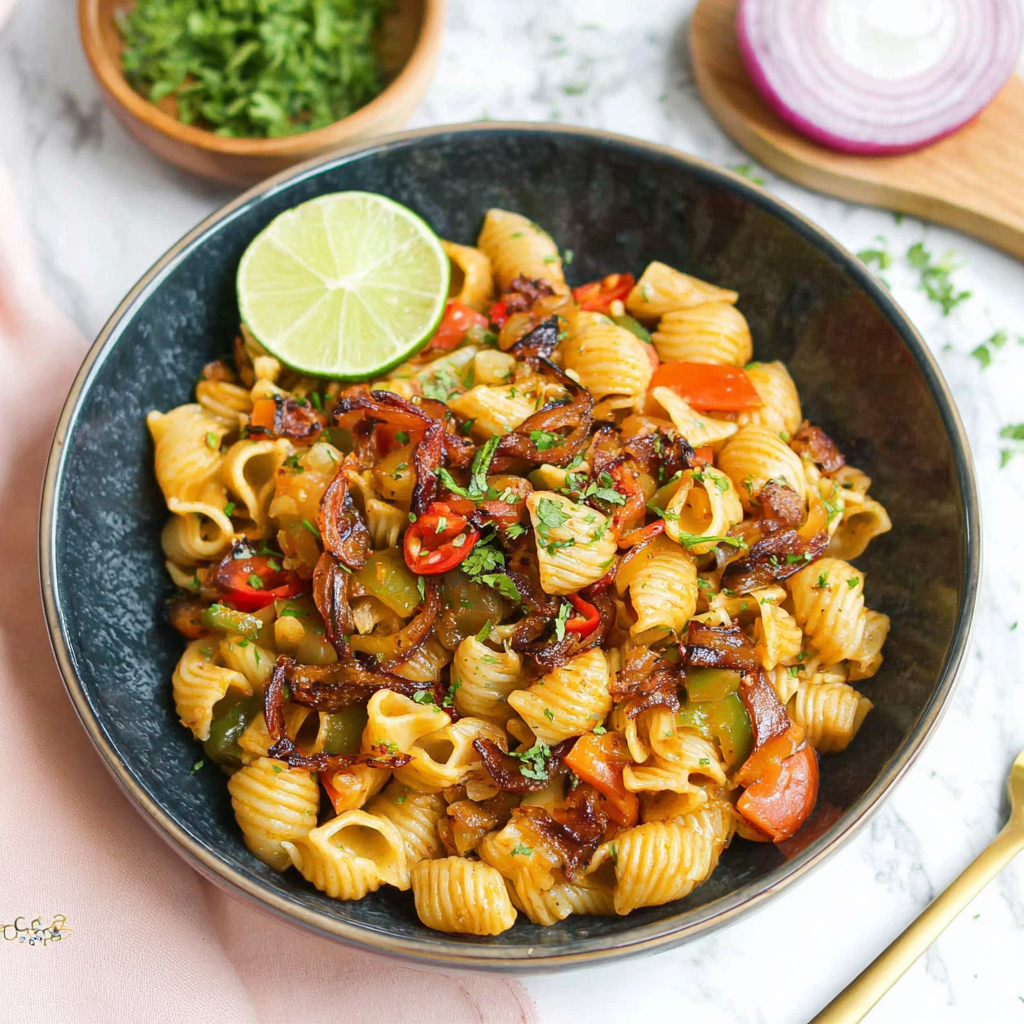
Savor the Flavor of Vegetarian Fajita Pasta
Ingredients
Method
- Cook the pasta according to package instructions, drain and set aside.
- In a large skillet, heat olive oil over medium heat.
- Add sliced onions and sauté until they become translucent.
- Stir in the garlic and sauté for another minute until fragrant.
- Add the sliced bell pepper and diced zucchini; continue to sauté for about 5 minutes.
- Sprinkle in chili powder, cumin, smoked paprika, salt, and pepper; stir to combine.
- Pour in the vegetable broth and bring the mixture to a simmer.
- Mix in the cooked pasta and lime juice, stirring to combine everything well.
- Taste and adjust seasoning if necessary, then serve hot, garnished with fresh cilantro.
Notes
Additional serving suggestions: pair with a crisp salad, garlic bread, or roasted seasonal vegetables for balance.
For make-ahead, prep components separately and assemble just before heating to preserve texture.
Taste and adjust with acid (lemon/vinegar) and salt right at the end to wake up flavors.