Introduction
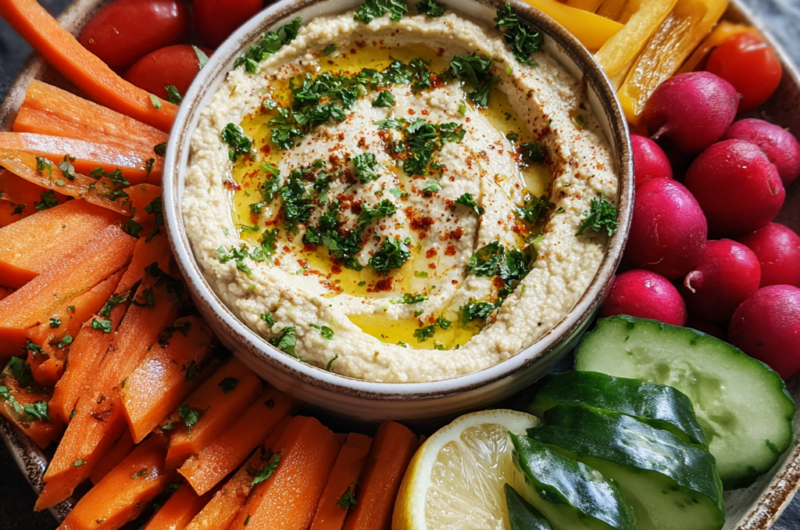
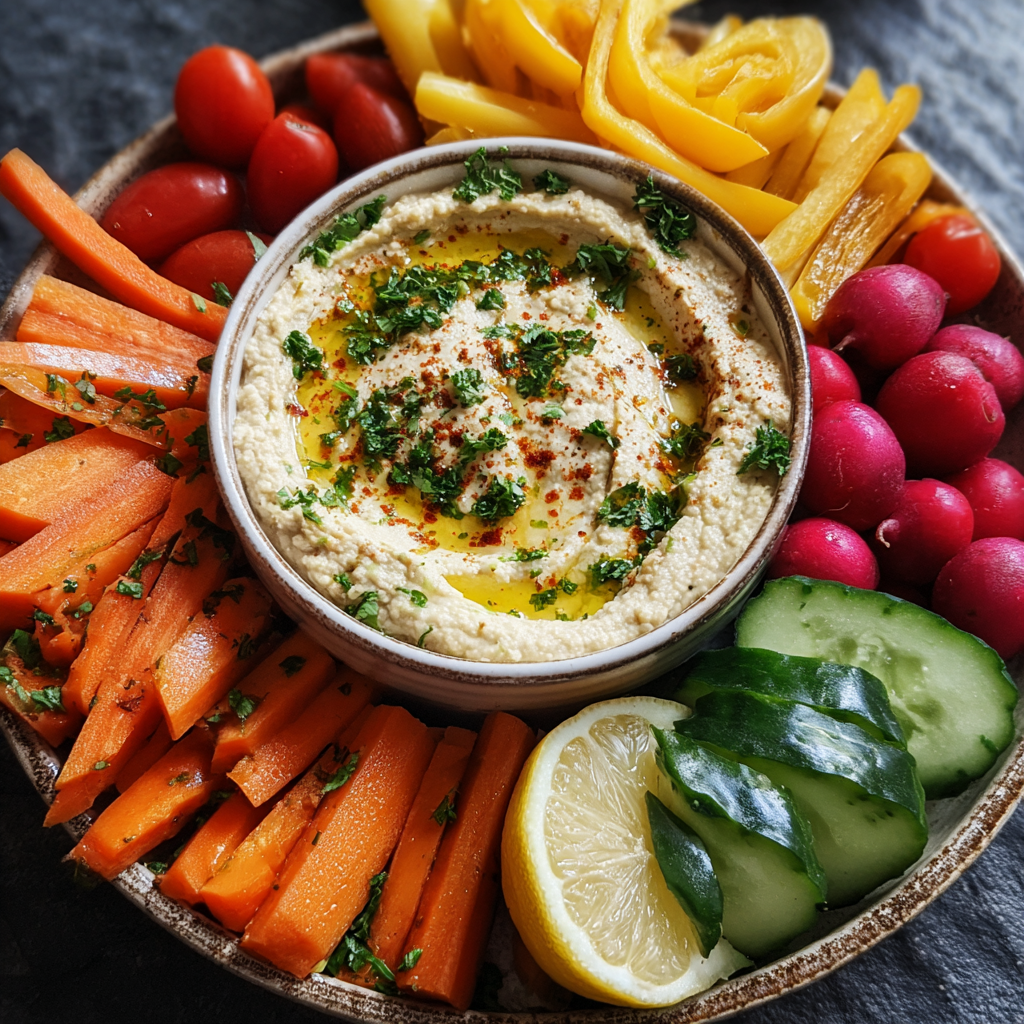
A vibrant hummus and veggie platter is not only a feast for the eyes but also a deliciously healthy choice for any gathering. Perfect for entertaining guests or enjoying a quiet evening at home, this dish celebrates fresh ingredients in a delightful way.
Hummus, with its creamy texture and nutty flavor, pairs wonderfully with a variety of fresh vegetables. This combination offers dietary fiber, vitamins, and minerals, making it a nutritious option for everyone.
Whether you’re preparing this platter for a casual get-together or a festive occasion, the process of creating it is part of the fun. Let’s dive into the essential ingredients and steps to craft your own stunning platter.
Ingredients
- 1 cup chickpeas
Chickpeas are the base of hummus, providing protein, fiber, and a creamy texture. They also offer a neutral flavor that pairs well with various herbs and spices. - 1/4 cup tahini
Tahini is made from ground sesame seeds and adds a rich, nutty flavor along with a smooth texture to the hummus. It also contributes healthy fats and calcium. - 2 tablespoons olive oil
Olive oil enriches the hummus, enhances its creaminess, and adds a fruity flavor. It's also packed with antioxidants and beneficial monounsaturated fats. - 2 tablespoons lemon juice
Lemon juice provides acidity that brightens the flavor of the hummus. It helps balance the richness of tahini and adds a refreshing zing. - 1 clove garlic, minced
Garlic adds a pungent zest and complexity to the flavor of the hummus. Its antimicrobial properties also make it a healthy addition. - 1 teaspoon ground cumin
Cumin introduces an earthy, warm flavor to the hummus. It enhances the overall taste while also providing a range of health benefits. - Salt to taste
Salt is a crucial seasoning that amplifies all the flavors in the hummus. Adjusting the salt allows you to perfect the final taste. - Assorted fresh vegetables (like carrots, cucumbers, and bell peppers)
Choosing a rainbow of fresh veggies not only adds nutrition but also offers a range of textures and flavors. They serve as the perfect accompaniment to scoop up the hummus.
Directions & Preparation
Step 1: Soak and prepare chickpeas if using dried ones.
If you choose dried chickpeas, soaking them overnight is essential for optimal texture and digestibility. This step softens the beans, making them easier to blend into a creamy hummus.
Step 2: Drain and rinse chickpeas.
Rinsing removed the excess starch and any residual salt from canned chickpeas, ensuring a clean flavor. This crucial step promotes a smoother texture in your hummus.
Step 3: Combine chickpeas, tahini, olive oil, lemon juice, garlic, cumin, and salt in a food processor.
Mixing these ingredients in a food processor allows the flavors to meld beautifully. The tahini and olive oil help break down the chickpeas for that creamy consistency, making this step vital.
Step 4: Blend until smooth and creamy.
This blending process is where the magic happens. Scrape down the sides as needed, and if the mixture is too thick, adding a little water helps achieve your desired consistency.
Step 5: Taste and adjust seasoning.
After blending, tasting the hummus allows you to tweak the flavors to your liking. A little more salt, lemon juice, or garlic can elevate your hummus from good to great.
Step 6: Transfer the hummus to a serving bowl.
Presentation matters. Transferring hummus to a bowl allows you to create a well for olive oil drizzle and decorative garnishes, making it visually appealing.
Step 7: Prepare the veggie platter.
Cut the assorted vegetables into bite-sized pieces for easy dipping. The variety offers colorful options that not only look great, but also provide a range of flavors and nutrients.
Step 8: Arrange the veggies around the hummus.
An attractive arrangement of vegetables around the bowl of hummus invites guests to dig in. This also allows for easy access and encourages creative dipping combinations.

Enhancing Hummus with Unique Flavors
Spicing up your hummus can take it to the next level. Consider adding roasted red peppers for a subtle sweetness, or a pinch of smoked paprika for a warm, smoky flavor. Fresh herbs such as parsley or cilantro can also bring in freshness. Don't hesitate to experiment with other ingredients to suit your palate, creating a personal signature hummus that excites the taste buds.
Vegetable Selection: Nutritional Powerhouses
When choosing vegetables for your platter, variety is key. Carrots are crunchy and sweet, while cucumbers add refreshing juiciness. Colorful bell peppers provide vibrant appeal and a bit of sweetness. Each veggie contributes unique nutrients; for example, carrots are high in beta-carotene, and bell peppers are packed with Vitamin C. This mix not only beautifies your platter but boosts its nutritional value.
Serving Suggestions to Elevate Your Platter
Serving suggestions can maximize the enjoyment of your hummus and veggie platter. Include pita chips or toasted pita bread for a contrasting texture. You may also want to sprinkle some sesame seeds or drizzle a little extra olive oil over the hummus for added richness. Consider providing a small bowl of olives or pickles for a taste contrast that complements the creaminess of the hummus and the crunch of the fresh vegetables.
FAQs
What if my hummus turns out too thick?
If your hummus is too thick, simply add a tablespoon of water at a time and blend again until you reach your desired creaminess.
How can I make the platter visually appealing?
Arrange the vegetables in a rainbow pattern or group similar colors together around the hummus to enhance the visual appeal of your platter.
What can I add for extra garnishing?
You can garnish the hummus with a drizzle of olive oil, a sprinkle of paprika, or fresh herbs like parsley or cilantro for an added touch of flavor.
Why is my hummus bland?
Bland hummus could result from insufficient seasoning. Adjust by adding more salt, lemon juice, or garlic to boost the flavor profile.
Can I swap chickpeas for another bean?
Yes, you can substitute chickpeas with white beans or black beans for a different flavor and texture while creating something unique.
How do I achieve a smoother hummus?
For a silkier texture, peel the skins off the chickpeas before blending or blend for a longer duration, ensuring a thorough mix.
What vegetables pair best with hummus?
Vegetables like carrots, cucumbers, bell peppers, and cherry tomatoes are excellent choices, providing a variety of textures and flavors that complement the creamy hummus.
Conclusion
Crafting a hummus and veggie platter is an enjoyable culinary endeavor that combines nutrition and creativity. By using fresh ingredients, you not only create a visually stunning presentation but also a flavorful experience for your guests.
This platter is perfect for any occasion and can be easily tailored to suit your tastes. Embrace your inner chef and have fun exploring different combinations and flavors!
Recipe Card
Discover the Joy of Hummus and Veggie Platter Creation
Ingredients
Method
- Soak and prepare chickpeas if using dried ones.
- Drain and rinse chickpeas.
- Combine chickpeas, tahini, olive oil, lemon juice, garlic, cumin, and salt in a food processor.
- Blend until smooth and creamy.
- Taste and adjust seasoning.
- Transfer the hummus to a serving bowl.
- Prepare the veggie platter.
- Arrange the veggies around the hummus.
Notes
Additional serving suggestions: pair with a crisp salad, garlic bread, or roasted seasonal vegetables for balance.
For make-ahead, prep components separately and assemble just before heating to preserve texture.
Taste and adjust with acid (lemon/vinegar) and salt right at the end to wake up flavors.