Introduction
When chilly evenings beckon for something comforting, nothing satisfies quite like a rich and flavorful beef stew. Packed with tender meat and an assortment of root vegetables, this dish not only warms the body but also nourishes the soul.
The essence of a great beef stew lies in its simplicity and the balance of flavors created by a medley of ingredients. As the stew simmers, the robust flavors meld beautifully, making for a meal that's hearty and satisfying. Dive into this recipe that transforms humble ingredients into something extraordinary.
Ingredients
- 2 pounds beef chuck, cut into 1-inch cubes
Beef chuck is ideal for stews due to its rich marbling and connective tissue, which breaks down during cooking, resulting in tender, juicy bites. - 4 cups beef broth
Broth serves as the base for your stew, adding depth of flavor and a savory richness that complements the beef and vegetables. - 3 medium carrots, peeled and sliced
Carrots add a subtle sweetness and contribute color to the dish, while also providing essential nutrients. - 2 medium potatoes, diced
Potatoes offer heartiness, absorbing the flavors of the broth while providing a satisfying texture that completes the meal. - 1 large onion, chopped
Onions form the aromatic foundation of the stew, releasing natural sugars when cooked, which enhances the overall flavor profile. - 2 cloves garlic, minced
Garlic imparts a fragrant element, boosting the flavor of the stew and adding complexity to the other ingredients. - 2 tablespoons tomato paste
Tomato paste adds a rich, tangy note that balances the savory elements of the broth and meat. - 1 teaspoon dried thyme
Thyme adds an earthy aroma and flavor that complements the beef and vegetables, enhancing the overall profile of the dish. - 1 bay leaf
Bay leaves infuse the stew with a subtle herbal flavor, rounding out the dish and enhancing the richness of the broth. - Salt and pepper to taste
Seasoning with salt and pepper helps to elevate the flavors of all the ingredients, ensuring a well-balanced final dish.
Directions & Preparation
Step 1: Sear the beef in a large pot over medium-high heat until browned.
Searing the beef creates a deep, caramelized crust that adds richness to the stew. This Maillard reaction enhances both flavor and texture. Do this in batches to avoid overcrowding the pot, which can hinder browning.
Step 2: Remove the beef from the pot and set aside. In the same pot, add onions and garlic, cooking until softened.
Cooking the onions and garlic in the residual fat of the beef allows them to pick up flavors left behind, creating a flavorful base for the stew. This step is crucial for enhancing the overall depth of flavor.
Step 3: Stir in the tomato paste, then return the beef to the pot along with the beef broth, bay leaf, and thyme.
Adding tomato paste at this stage helps to deepen the flavor before introducing the liquid. This layering technique ensures a rich, hearty broth that supports the other ingredients.
Step 4: Bring the mixture to a boil, then lower the heat and let simmer for about 1.5 hours.
Simmering allows the flavors to meld and the beef to tenderize. Keep the pot covered to reduce evaporation, ensuring the stew remains moist. Stir occasionally to prevent sticking.
Step 5: After simmering, add the root vegetables and cook until they are tender, about 30 minutes.
Adding the carrots and potatoes later prevents them from becoming mushy while absorbing the stew's flavors. This step is essential for achieving a balanced texture among the ingredients.
Step 6: Season with salt and pepper before serving, adjusting to taste.
Final seasoning is crucial as the flavors concentrate during cooking. Taste-testing allows you to find the perfect balance, ensuring each serving is flavorful and satisfying.

Choosing the Right Cut of Beef
Selecting the right cut of beef can make or break your stew. Chuck roast is preferred for its fat content and connective tissues, which break down during cooking, yielding tender meat. Look for bright red color and marbling to ensure flavor. Other suitable cuts include brisket or round, but chuck remains the classic choice for its balanced flavor and tenderness.
Perfect Pairings for Root Vegetables
Root vegetables play a vital role in building the stew's hearty character. Carrots, potatoes, and parsnips are classic choices, but don't hesitate to experiment with others like turnips or sweet potatoes for added flavor. These vegetables not only contribute texture but also soak up the savory juices, enhancing the dish's overall richness while providing nutrients to the meal.
The Importance of Simmering
Simmering is more than just cooking; it’s the process that allows flavors to meld and deepen. A low and slow simmer transforms tough cuts of meat into melt-in-your-mouth pieces while the vegetables become tender yet retain their shape. Monitoring the heat is crucial; too high can lead to a pot of overcooked ingredients, while too low may stall the flavor development. Patience is key to the perfect stew.
FAQs
Why did my stew turn out bland?
A bland stew usually indicates under-seasoning or insufficient flavor development during cooking. Ensure to taste throughout the cooking process and adjust with salt and pepper as needed.
How can I thicken my beef stew?
If your stew is too thin, you can thicken it by simmering it uncovered for a while to reduce the liquid or by adding a slurry of cornstarch mixed with cold water. Stir it in and let it cook until thickened.
What can I substitute for beef if I don’t have any?
For a non-beef alternative, you can use chicken thighs or pork shoulder. Both cuts have enough fat and connective tissue to stand up to slow cooking and create a flavorful stew.
How do I avoid overcooking the vegetables?
To prevent overcooking, add hearty vegetables like potatoes and carrots halfway through the simmering process. This way, they remain tender but retain their shape and texture.
Can I use frozen vegetables in this stew?
Yes, you can use frozen vegetables, but add them towards the end of cooking as they are already pre-cooked. This will prevent them from turning mushy.
What can I do if my stew is too thick?
If your stew is thicker than desired, gradually stir in additional beef broth or water until you reach your desired consistency. Reheat slowly after adjusting.
Conclusion
Preparing a comforting beef stew with root vegetables is more than just cooking; it's an experience steeped in tradition and warmth. This hearty dish transforms ordinary ingredients into a delightful meal that's perfect for sharing.
Whether enjoyed on a chilly evening or served to guests, beef stew invites you to savor each delicious bite. Embrace the process and enjoy the savory rewards of your efforts as the stew becomes a beloved favorite in your kitchen.
Recipe Card
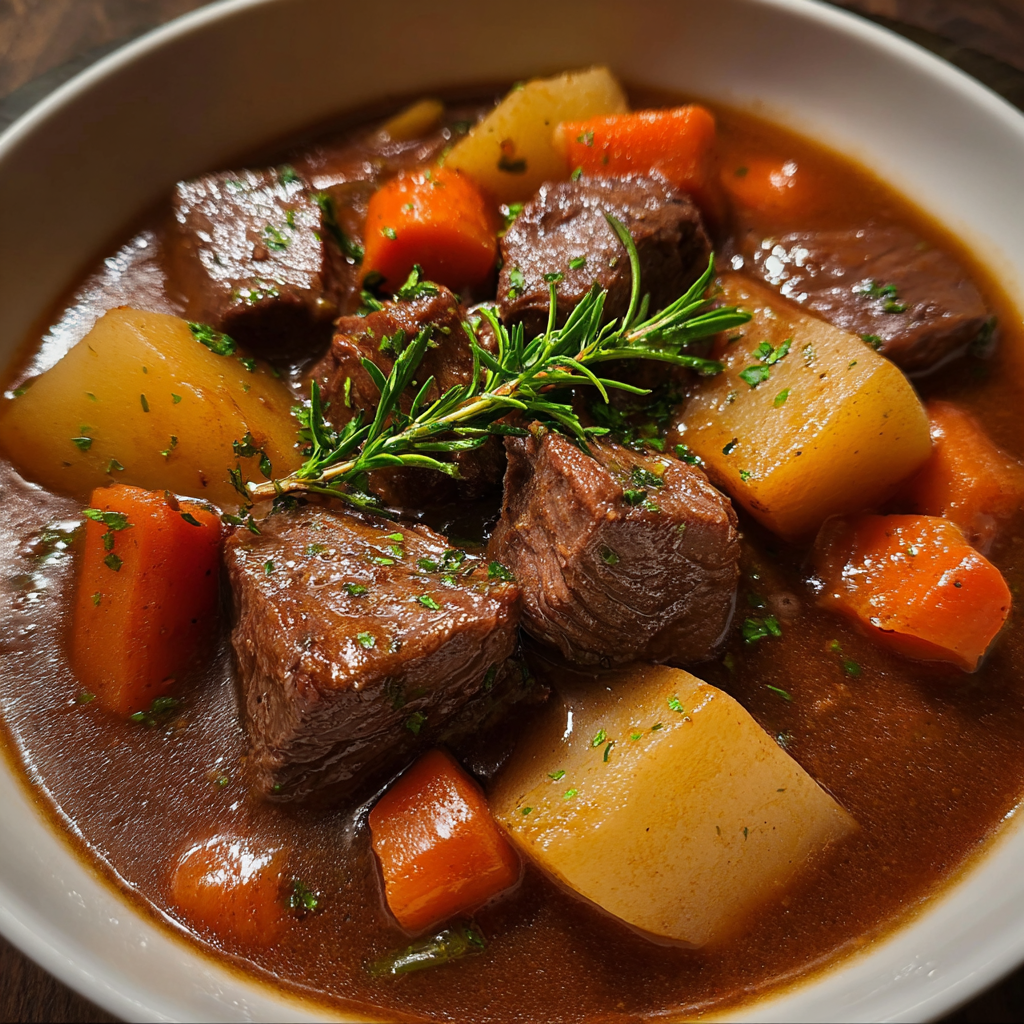
Hearty Beef Stew with Root Vegetables for Cozy Nights
Ingredients
Method
- Sear the beef in a large pot over medium-high heat until browned.
- Remove the beef from the pot and set aside. In the same pot, add onions and garlic, cooking until softened.
- Stir in the tomato paste, then return the beef to the pot along with the beef broth, bay leaf, and thyme.
- Bring the mixture to a boil, then lower the heat and let simmer for about 1.5 hours.
- After simmering, add the root vegetables and cook until they are tender, about 30 minutes.
- Season with salt and pepper before serving, adjusting to taste.
Notes
Additional serving suggestions: pair with a crisp salad, garlic bread, or roasted seasonal vegetables for balance.
For make-ahead, prep components separately and assemble just before heating to preserve texture.
Taste and adjust with acid (lemon/vinegar) and salt right at the end to wake up flavors.