Introduction
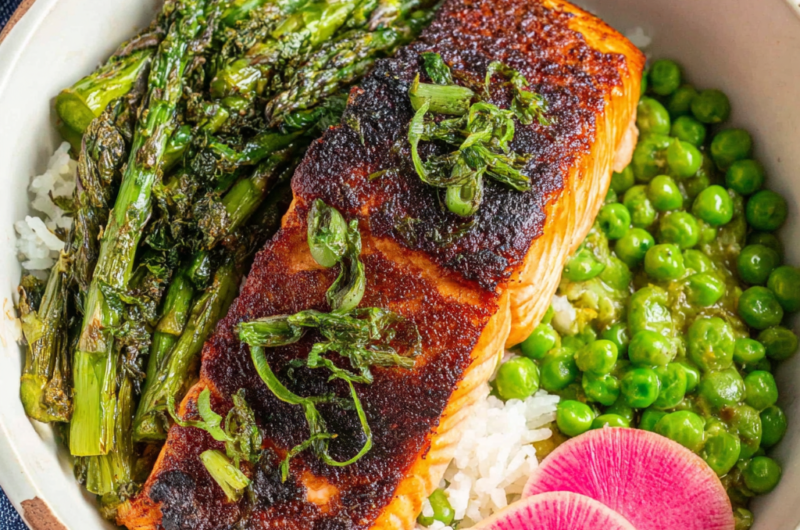
As winter fades and spring blossoms, the kitchen invites fresher flavors and vibrant colors. One dish that truly embodies the essence of this season is the Spring Salmon Bowl with Asparagus and Peas. This meal not only is visually delightful but also packed with nutrition.
Salmon, with its rich omega-3 fatty acids, pairs beautifully with tender asparagus and sweet peas, creating a symphony of flavors and textures. It's a perfect way to celebrate the renewed energy of spring, providing a satisfying yet healthy choice for home cooks.
Ingredients
- 2 fillets fresh salmon (6 oz each)
Salmon is the star of this dish, providing a rich source of omega-3 fatty acids that promote heart health. Its naturally buttery flavor complements the freshness of spring vegetables. - 1 cup asparagus, trimmed and cut into 2-inch pieces
Asparagus adds a delightful crunch and a vibrant green color, making the dish visually appealing. It's also packed with vitamins and antioxidants, contributing to a healthy diet. - 1 cup fresh peas (or frozen, thawed)
Sweet peas offer a pop of sweetness and a soft texture that contrasts beautifully with the other ingredients. They are also rich in protein and fiber, enhancing the nutritional profile. - 2 cups cooked quinoa
Quinoa serves as a hearty base for the bowl, adding a nutty flavor and plenty of protein. It’s a gluten-free grain that helps bind the dish together, making it filling and satisfying. - 2 tablespoons olive oil
Olive oil not only helps with cooking but also enhances flavor. It adds healthy fats and helps to keep the salmon moist while roasting. - 1 lemon, zested and juiced
Lemon brightens the entire dish with its acidity. The zest adds a concentrated citrus flavor while the juice helps to balance the richness of the salmon. - Salt and pepper to taste
Seasoning is crucial for bringing out the natural flavors of the ingredients. Proper seasoning enhances each component and ties the dish together. - Fresh herbs (like dill or parsley) for garnish
Herbs not only add a burst of freshness and flavor, but they also provide a beautiful finishing touch, enhancing the dish visually and taste-wise.
Directions & Preparation
Step 1: Preheat the oven to 400°F (200°C).
Preheating the oven ensures that the salmon cooks evenly and quickly. A high oven temperature also helps to get a beautiful roasted exterior, sealing in moisture.
Step 2: Prepare the quinoa according to package instructions.
Cooking quinoa right at the start ensures that it’s ready when the salmon and vegetables are done. It absorbs flavors and releases its nutty aroma, making it a delightful base for your bowl.
Step 3: Toss the asparagus and peas with olive oil, salt, and pepper in a bowl.
Coating the vegetables in olive oil prevents them from drying out during roasting and allows the seasoning to stick. This step maximizes flavor, making them taste fresh and vibrant.
Step 4: Spread the seasoned vegetables on a baking sheet and roast for 10 minutes.
Roasting the asparagus and peas brings out their natural sweetness while keeping them crisp. This step also means they'll be ready alongside the salmon, ensuring efficient cooking.
Step 5: While the vegetables are roasting, season the salmon fillets with salt, pepper, and lemon zest.
Seasoning the salmon allows the flavors to penetrate the fish as it cooks, creating a flavorful crust. The lemon zest adds a refreshing aroma that uplifts the dish.
Step 6: Add the seasoned salmon to the baking sheet with the vegetables and roast for another 12-15 minutes, until the salmon is cooked through.
Putting the salmon in at this stage ensures it cooks without drying out. The combination of salmon and vegetables roasting together allows the flavors to meld beautifully.
Step 7: Remove the baking sheet from the oven, and drizzle with lemon juice.
Drizzling lemon juice at the end brightens the dish and adds a fresh citrus note. It enhances the flavors without overwhelming the natural taste of the salmon and vegetables.
Step 8: To serve, layer quinoa in bowls, top with salmon, browned asparagus, and peas. Garnish with fresh herbs.
Layering the ingredients in bowls not only showcases their colors but also creates a great texture contrast, from the fluffy quinoa to the flaky salmon. Fresh herbs will elevate the presentation and flavor.

The Quintessential Spring Ingredients
A Spring Salmon Bowl captures the vibrant flavors of the season perfectly. Ingredients like asparagus and peas are at their peak, boasting crisp sweetness and colorful appeal. The combination adds a fresh crunch, celebrating spring’s bounty, while also being a wholesome option that nourishes the body.
Balancing Flavors and Textures
In this dish, the interplay of textures and flavors is key. The tender, flaky salmon contrasts beautifully with the crunch of asparagus and the succulence of peas. Combined with the nutty quinoa base, diners experience a delightful variety that makes each bite interesting and satisfying.
Enhancing Your Salmon Bowl Experience
While the basic Spring Salmon Bowl is delicious on its own, consider adding toppings like sliced avocado for creaminess or nuts for an additional crunch. Adjusting these finishing touches allows you to personalize the dish, ensuring that it caters to your unique palate.
FAQs
What if my salmon is overcooked?
If the salmon is overcooked, it can become dry. To prevent this in the future, use a food thermometer to check the internal temperature, aiming for around 145°F (63°C). Undercooking slightly allows carryover cooking to finish it perfectly.
Can I make this with frozen salmon?
Yes, frozen salmon works well. Just ensure to thaw it thoroughly before seasoning and cooking to achieve even cooking and flavor.
What can I use instead of quinoa?
If you prefer a different grain, farro or brown rice can be great substitutes for quinoa, offering a similar texture and flavor profile.
How can I make the dish more flavorful?
For added flavor, consider marinating the salmon in a mixture of soy sauce, ginger, and garlic before cooking. This will infuse the fish with deeper flavors that pair well with the freshness of vegetables.
What if the dish seems bland?
If your dish lacks flavor, try adding more seasoning or a splash of soy sauce to amplify the taste. Fresh herbs or a sprinkle of crushed red pepper can also enhance the overall flavor profile.
Can I add other vegetables?
Absolutely! Feel free to add other spring vegetables like radishes, young spinach, or snap peas for variety. Just ensure they have similar cooking times.
Conclusion
Creating a Spring Salmon Bowl with Asparagus and Peas not only makes for a delicious meal but also allows you to celebrate the vibrant flavors of the season. With its array of textures and nutrients, this dish embodies the essence of spring.
Invite friends over or enjoy a quiet night in with this satisfying bowl. Remember to tweak it to suit your tastes, and savor every bite as you enjoy this seasonal delight.
Recipe Card
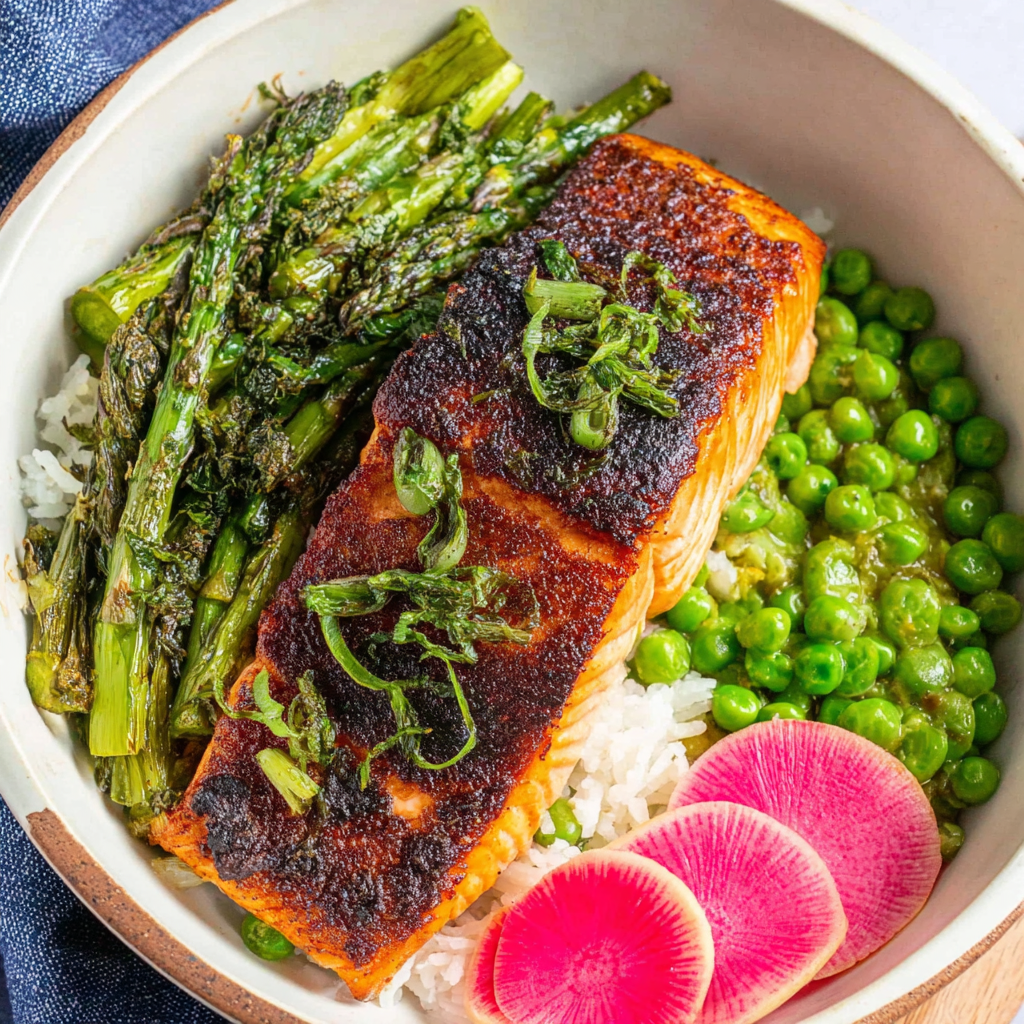
Vibrant Spring Salmon Bowls with Asparagus and Peas
Ingredients
Method
- Preheat the oven to 400°F (200°C).
- Prepare the quinoa according to package instructions.
- Toss the asparagus and peas with olive oil, salt, and pepper in a bowl.
- Spread the seasoned vegetables on a baking sheet and roast for 10 minutes.
- While the vegetables are roasting, season the salmon fillets with salt, pepper, and lemon zest.
- Add the seasoned salmon to the baking sheet with the vegetables and roast for another 12-15 minutes, until the salmon is cooked through.
- Remove the baking sheet from the oven, and drizzle with lemon juice.
- To serve, layer quinoa in bowls, top with salmon, browned asparagus, and peas. Garnish with fresh herbs.
Notes
Additional serving suggestions: pair with a crisp salad, garlic bread, or roasted seasonal vegetables for balance.
For make-ahead, prep components separately and assemble just before heating to preserve texture.
Taste and adjust with acid (lemon/vinegar) and salt right at the end to wake up flavors.